France, land of pyrotechnicians: when fire becomes art
From the royal celebrations of Versailles to contemporary pyromusical creations, France has maintained a unique relationship with fireworks for several centuries. A story of heritage, spectacle and emotion that Masters de Feu will celebrate in 2027.
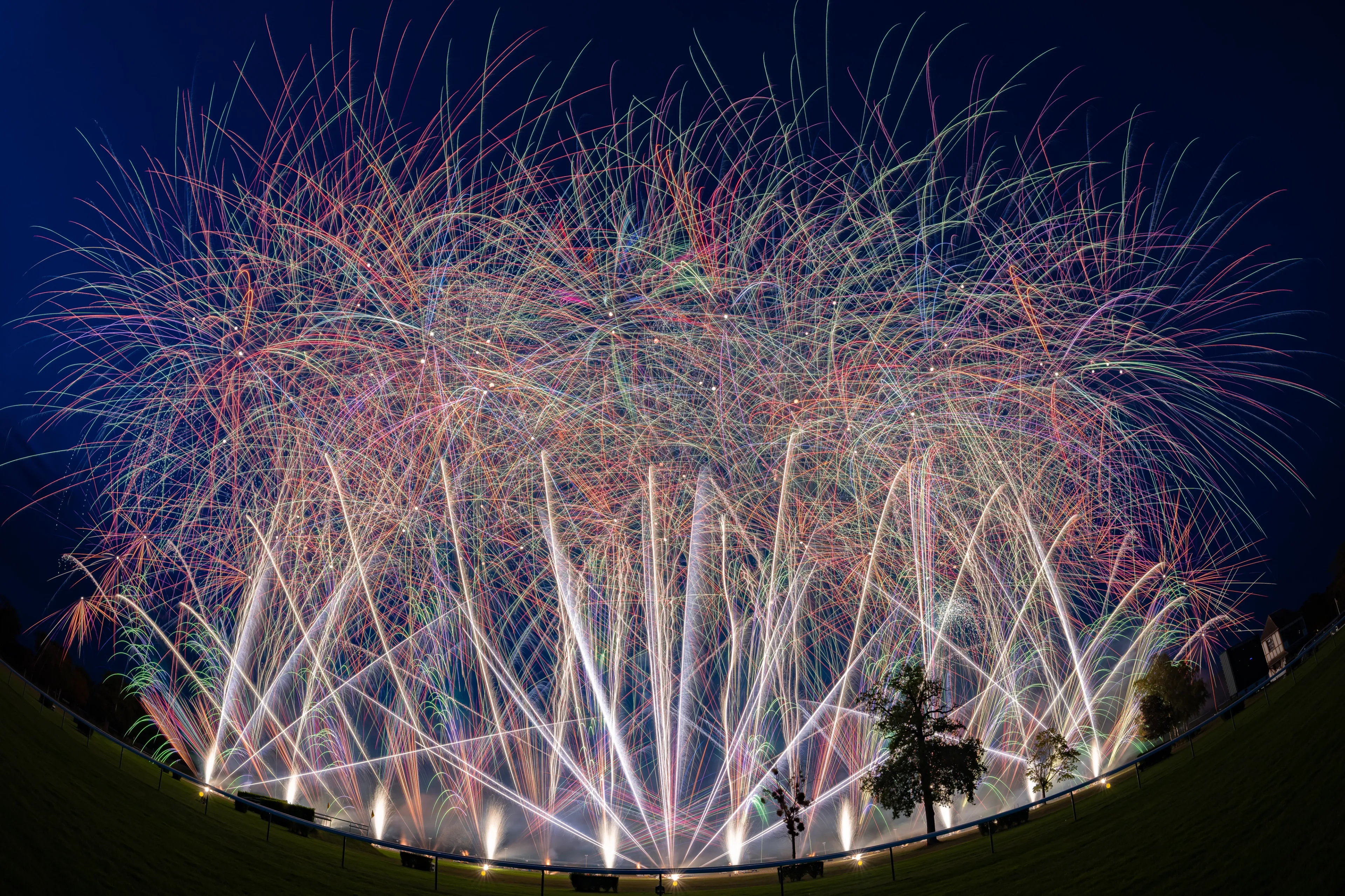
France did not invent gunpowder or the first rockets. Yet it played a profound role in transforming fireworks into a true stage art.
From the gardens of Versailles to village squares, from family workshops to major international competitions, French pyrotechnics has been built around a single ambition: not merely to light up the sky, but to tell a story, create a setting, and bring audiences together through a shared emotion.
In 2027, Masters de Feu will dedicate an entire edition to this richness. Three French houses will be invited to pit their signatures against one another in the skies over Compiègne. Before discovering who they are, let us look back at several centuries of a history in which fire gradually became spectacle.
At Versailles, fire takes the stage
Under the reign of Louis XIV, fireworks were already far more than a simple diversion. They took part in vast productions combining ephemeral architecture, theatre, music, water, light, and monumental set pieces.
In May 1664, the celebrations of thePlaisirs de l’Île enchantéeculminated notably in the spectacular conflagration of the palace of the sorceress Alcine. Fire entered into dialogue with the water surrounding the set and became the climax of a story inspired by Ariosto’s world.
In 1668, the Grand Divertissement royal brought together a Molière and Lully comedy, a ball, a banquet, and fireworks in the gardens of Versailles. A few years later, in August 1674, a grand spectacle was launched above the Grand Canal to celebrate the return of the conquest of Franche-Comté.
These great festivities already laid the foundations of modern pyrotechnic creation: fire was not shown solely for its force. It was integrated into a dramaturgy, transformed a place, and brought an artistic progression to its close.
More than three centuries later, this logic remains at the heart of pyromusical shows.
From royal celebration to popular celebration
In the 18th century, the arrival in Paris of Italian pyrotechnicians helped develop new forms of spectacle. In 1739, the Ruggieri brothers, originally from Bologna, settled in France at the request of Louis XV.
Pyrotechnicians to the king and men of theatre, they took part in court festivities as well as major public celebrations. Their stage experience enabled them to explore new settings, new figures, and an ever more theatrical use of fire.
Gradually, pyrotechnic spectacle left the royal gardens alone. It accompanied weddings, peace treaties, official visits, and the great events of collective life.
In the 19th century, this tradition became firmly rooted in towns and cities. When 14 July officially became the national holiday in 1880, torchlight parades and fireworks were already part of the celebrations. Fire was no longer only a symbol of prestige: it became a moment of popular gathering.
This relationship has since become deeply embedded in French culture. In major cities as well as the smallest communes, fireworks still mark celebrations, local festivals, and the great milestones of collective life.
Know-how passed down in the workshops
Behind the spectacular image of a sky ablaze lies a métier of precision.
For a long time, knowledge circulated within families and workshops. Techniques, assembly methods, and knowledge of colors, materials, and trajectories were passed from one generation to the next. Experience played an essential role: knowing how to anticipate an effect’s behavior, understanding the wind, reading a site, and building a coherent progression.
This culture of transmission remains very present. Today it meets professional training, strict regulations, and ever more precise technological tools.
The contemporary pyrotechnician is at once technician, stage director, and interpreter of the sky. He must master the products, safety distances, firing systems, and site constraints, while preserving an artistic vision of the whole.
For a great show depends not only on the power or quantity of effects used. It rests on the accuracy of a choice, the balance of a color, the breathing space between two sequences, and the way each tableau prepares the next.
When music becomes a score of fire
The evolution of firing systems and digital programming has profoundly transformed pyrotechnic writing.
Music can now be studied with great precision. An accent, a percussion hit, an orchestral swell or a silence all become markers for shaping movement in the sky.
But synchronization is not simply about triggering an effect on every note. It is about interpreting the music.
Some compositions call for fast, geometric sequences. Others require more space, suspended effects or a color left alone in the night. The same soundtrack can thus give rise to radically different interpretations.
Technology brings precision. Artistic writing gives it meaning.
It is in this balance that the pyromusical show becomes a true creation: a work designed for a place, an audience and a moment that will never quite be repeated in the same way.
Is there a French school of fire?
It would be tempting to sum up French pyrotechnics in a single signature. Instead, it is defined by its diversity.
Some houses cultivate a highly musical style, built on subtle transitions and precise rhythm. Others favor grand structures, power or the spectacular transformation of space. Some creations lean toward theater, while others embrace a more graphic, popular or cinematic approach.
This diversity is probably one of the main strengths of French expertise.
It allows pyrotechnicians to work on traditional festivals as well as international events, competitions, concerts, commemorations or major creations combining pyrotechnics, light, water, lasers and drones.
Each time, the challenge is the same: to respect the identity of the venue and the event while offering a style that is immediately recognizable.
A 2027 edition dedicated to French creation
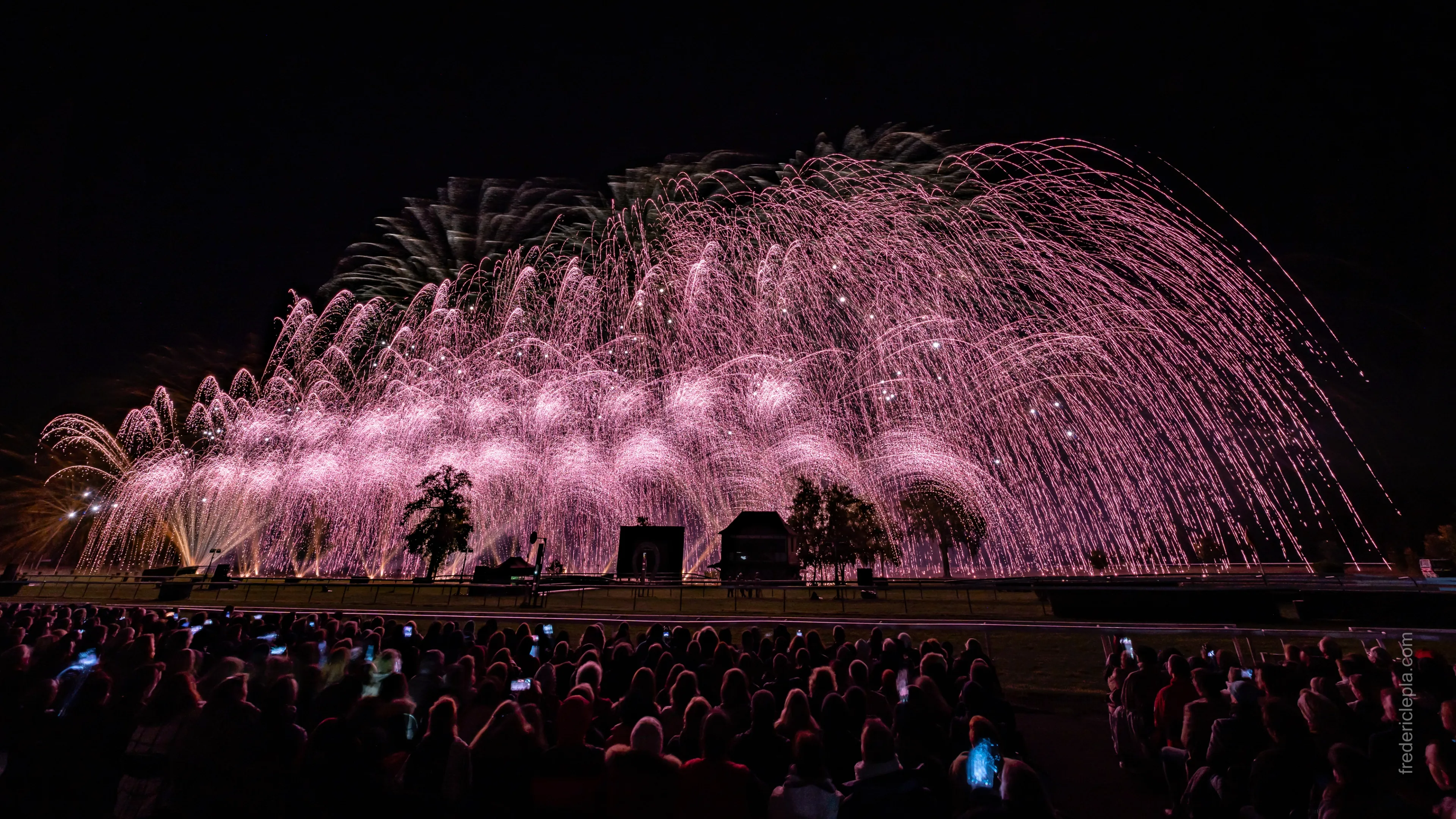
On Saturday, September 25, 2027, Masters de Feu will present, for the first time, an edition devoted exclusively to French houses.
Three teams will work under the same creative conditions: the same duration, a common theme, a comparable budget and the same artistic and technical constraints. Yet each will have to assert its personality and deliver a singular interpretation of the challenge entrusted to it.
As per Masters de Feu rules, the shows will be presented anonymously. The names of the houses and the running order will only be revealed at the time the results are announced.
The winning team will receive the second Silver Master of the 2026–2028 cycle and advance to the grand final for the Gold Master 2029.
The identities of the three competitors and the theme of the edition will be revealed gradually over the coming months.
This special France edition will therefore be more than a tribute to the past. Above all, it will show what French pyrotechnics is today: a living art, in motion, driven by stories, workshops, innovation and a wealth of different sensibilities.
Next September, the sky over Compiègne will not speak with one voice. It will resonate with three French signatures.