Pyrotechnic art, the great forgotten of French culture
Popular, historical, musical and deeply scenographic, pyrotechnic art brings together millions of spectators every year. Yet it still remains largely absent from the French cultural narrative and is rarely considered a fully fledged artistic discipline.
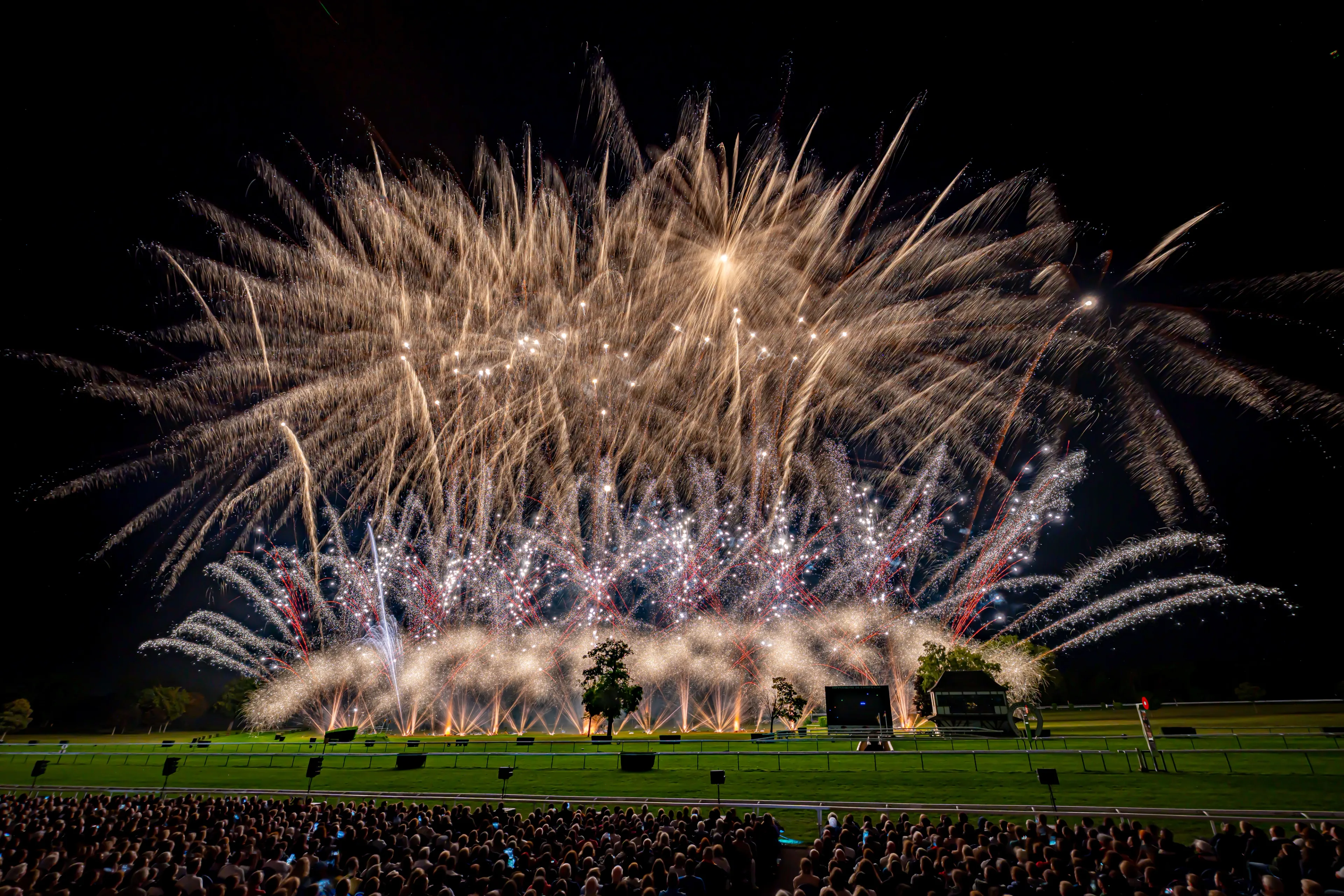
Every year, millions of French people gather to watch the sky ignite. In town squares, by lakes, facing monuments, or at major festivals, fireworks accompany celebrations, commemorations, and some of the most important moments in our collective life.
It belongs to our popular memory. Everyone carries the memory of a grand finale, a piece of music, a color, or that strange second of silence that precedes the explosion in the sky.
Yet when it comes to culture, pyrotechnic art often remains at the door.
People speak of entertainment, technical services, attractions, or amusement. They mention products, noise, safety, and the permits required. These questions are essential, but they say nothing about the work itself, its writing, its staging, or the artists who imagined it.
What if the first obstacle to recognizing pyrotechnic art were simply the way we look at it?
A popular spectacle that escapes the cultural narrative
In France, regulations officially recognize the notion offireworks display. They define the conditions for preparing and carrying out these events, the required qualifications, product categories, and safety obligations.
This rigor is indispensable. Pyrotechnic devices are not like any other material, and their use requires absolute professional mastery.
But the institutional framework for pyrotechnics remains largely built around risk management. The work is often described by the quantity of active material used, the classification of the fireworks, the safety perimeter, or the number of technicians involved.
Rarely by its artistic intent.
When a theater presents a new creation, its author, director, performers, and set design are named. When a fireworks display is announced, the public usually knows the date, the time, and sometimes the budget, but far less often the name of its creator or the artistic approach that guided its creation.
This difference in treatment helps reinforce the idea that fireworks are above all an event product, whereas they can be an original work designed for a place, a piece of music, and an audience.
Looking beyond the powder
A pyrotechnic creation does not begin on the day of the launch.
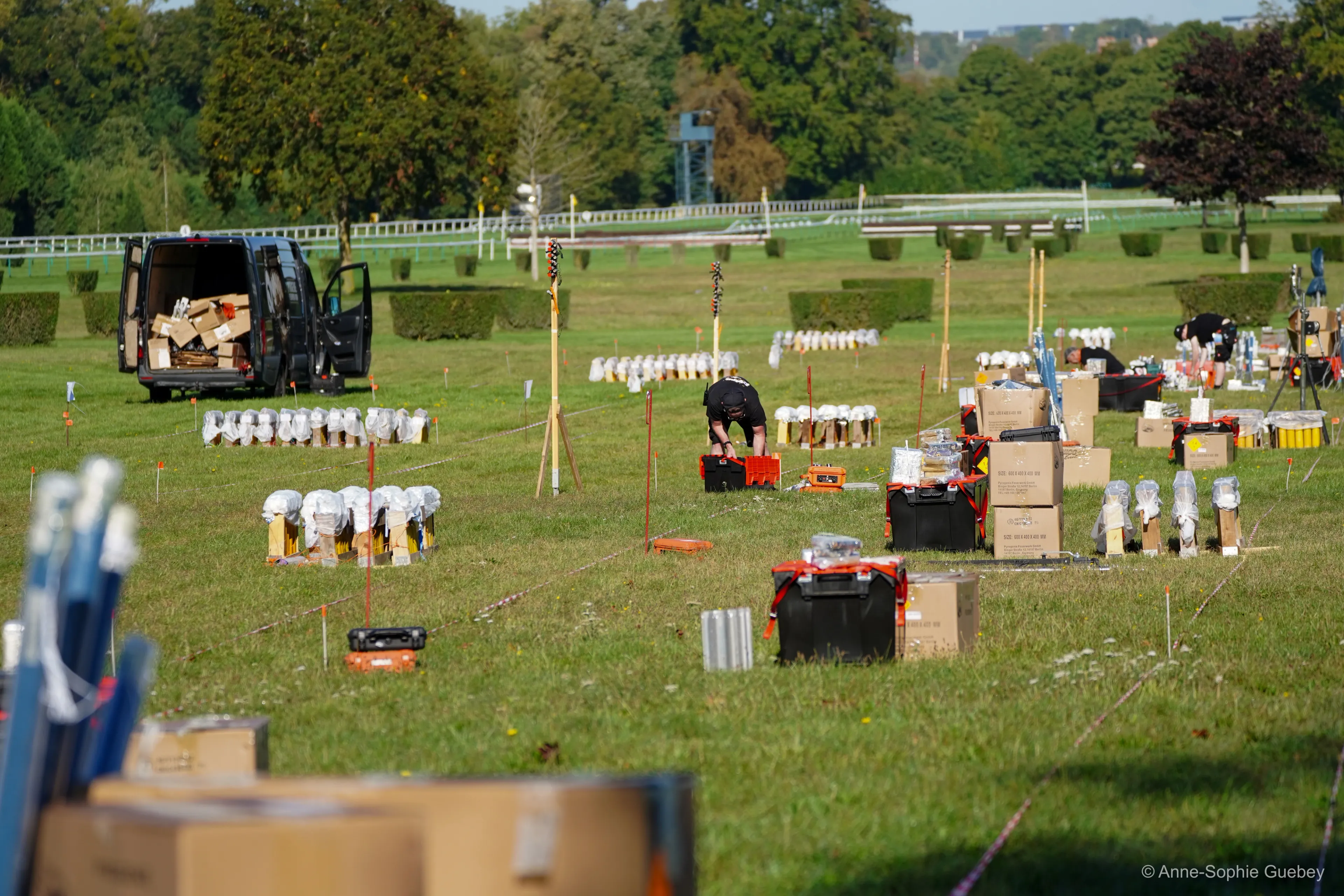
It begins several months earlier, with an intention, a theme, or an emotion to translate. One must listen to the music, understand its structure, choose the colors, imagine the trajectories, and determine how the viewer’s gaze will move through space.
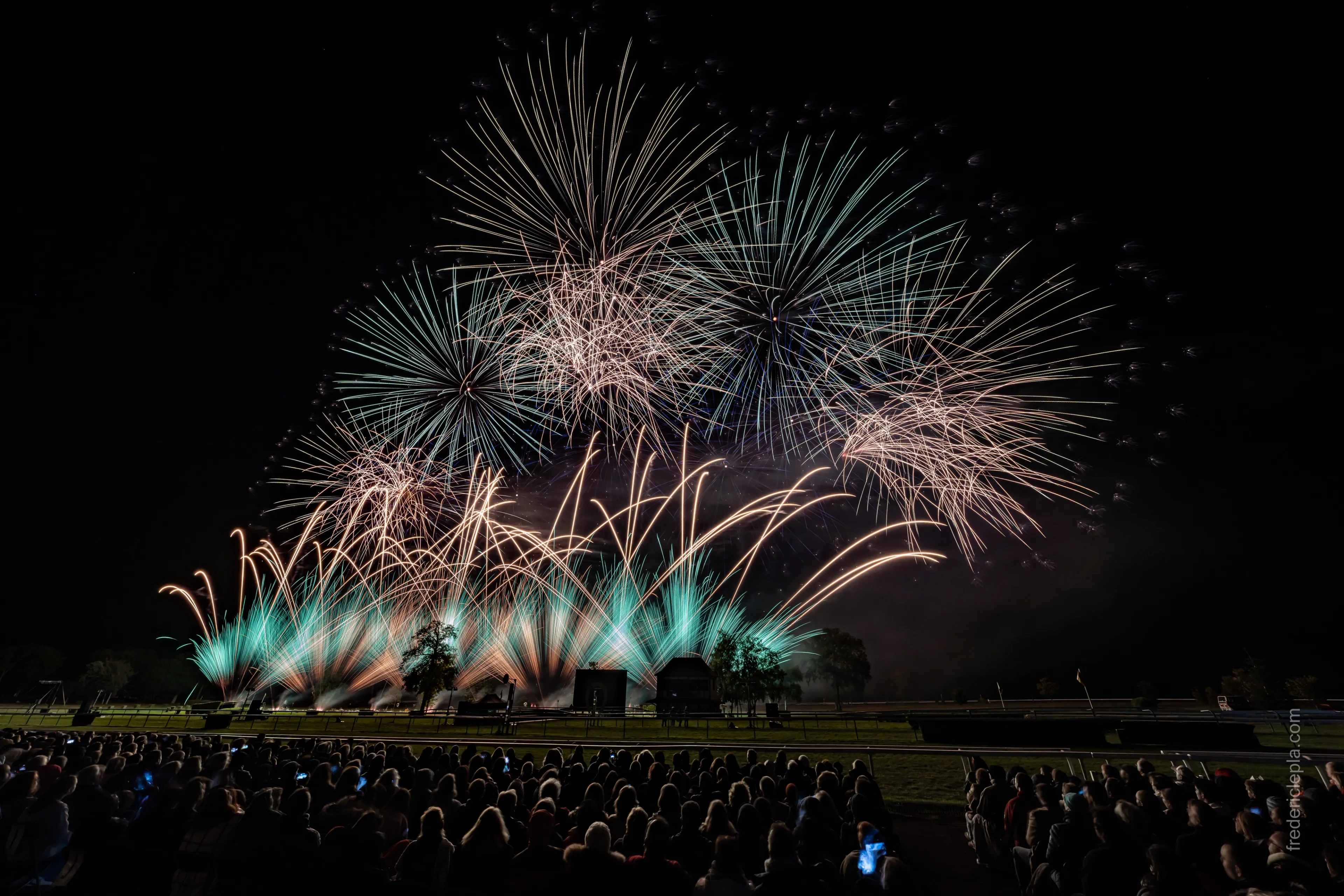
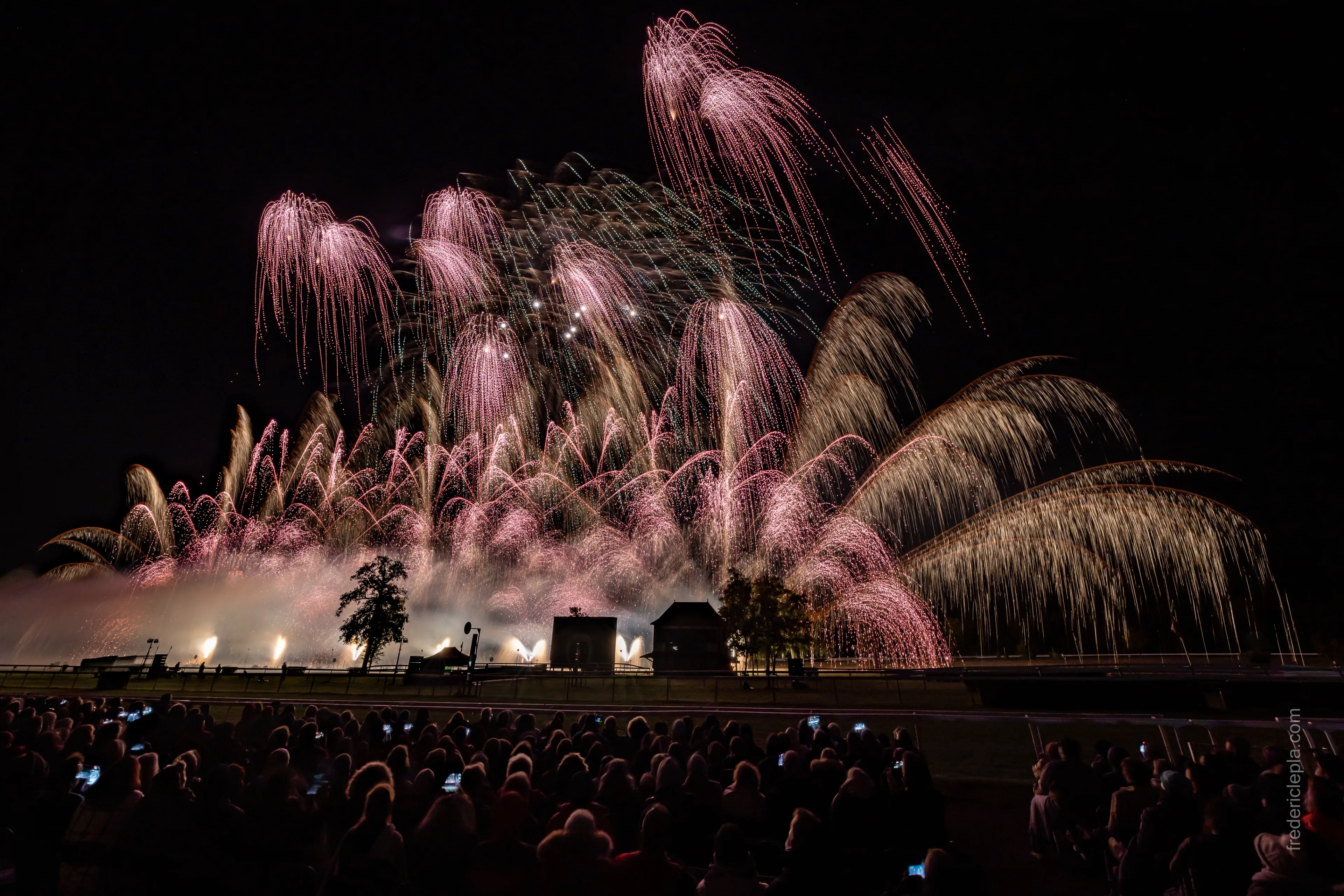
Each effect has its duration, height, opening, and rhythm. A comet draws a line. A mine rises from the ground. A shell fills the sky. A suspended effect slows time. Silence can become as important as an explosion.
The creator arranges these elements as a choreographer composes movement or as a director builds a visual tableau.
They decide when the sky should be fully filled and when it should almost return to darkness. They choose to follow the music, answer it, or contradict it. They create repetitions, ruptures, breaths, and dramatic progression.
Pyrotechnics thus has its own vocabulary, its grammar, and its narrative possibilities.
Powder is only the material. The work lies in the way it is given form.
A musical and scenographic writing
The precision of contemporary firing systems now makes it possible to synchronize effects with music to within a fraction of a second.
But the quality of a pyromusical show is not measured by the number of launches perfectly timed to a soundtrack. Synchronization has value only when it serves an intention.
A show may choose to follow every percussion, extend a voice, gradually reveal a melody, or deliberately let the music stand alone for a few seconds. The same composition can thus give rise to entirely different interpretations.
Added to this musical writing is a scenic reflection.
The show must take into account the width of the site, the distance from the audience, the terrain, the architecture, the vegetation and the perspectives. A creation designed for a lake is not written in the same way as a firework display staged in front of a monument or launched from the track of a racecourse.
The site is therefore not merely a technical support. It becomes part of the work.
This relationship between music, space, light and movement naturally brings pyrotechnic art closer to live performance. Like dance or theatre, it is based on carefully prepared writing, but its true existence lasts only for the duration of its performance.
Can the ephemeral be a work of art?
The almost immediate disappearance of the show probably contributes to its limited recognition.
A painting endures. A sculpture can be preserved. A book can be reread. Fireworks, on the other hand, fade away at the very moment they appear.
But this fragility does not prevent a work from existing.
Dance disappears with the performers’ movement. A theatre performance will never be exactly the same as the next one. An artistic performance may be conceived to exist only once. Yet these forms are fully recognised by the cultural world.
Pyrotechnic art shares this ephemeral nature.
It can be preserved only through its plans, soundtracks, simulations, photographs and recordings. None of these documents, however, can convey the full experience: the scale of the sky, the audience’s anticipation, the light on faces, the vibration of a launch or the physical sensation of the final bouquet.
The pyrotechnic work belongs to a place and a moment.
Its disappearance does not diminish its value. It may even be what makes it most singular.
A living heritage, yet still little identified
France has a long pyrotechnic history. The great royal festivities at Versailles already associated fire with water, music, theatre and ephemeral architecture. Workshops and families of pyrotechnicians then passed on their knowledge, while fireworks gradually became one of the major rituals of popular and republican celebrations.
This history cannot be reduced to a few famous events. It rests on gestures, vocabularies, methods of making and staging, but also on a capacity to constantly renew the relationship between fire and the public.
Intangible cultural heritage precisely recognises living practices, performing arts, festivities and craft skills passed down through generations.
Pyrotechnic art lies at the crossroads of all these categories.
It appears in the memory and descriptions of many traditional celebrations, yet it is still rarely studied as an independent heritage. Its artistic archives are scattered, its creators are sometimes little identified, and its contemporary history remains largely to be written.
Recognising this heritage would not mean freezing pyrotechnics into an unchanging tradition. A living heritage continues to evolve, experiment and engage in dialogue with its time.
Why is this recognition important?
Cultural recognition is not simply a matter of prestige.
It helps preserve archives, document works, transmit know-how, and better identify creators. It also encourages research, training, and critical reflection around a discipline.
Treating fireworks as mere entertainment often leads to prioritizing duration, quantity, or intensity. Recognizing its artistic dimension, on the other hand, makes it possible to question the quality of the writing, the originality of a composition, and its relationship with the venue.
This evolution could also foster a more responsible transformation of the profession.
A living art must be able to question its materials, its methods, and its impact. Research into waste reduction, products generating less residue, reusable supports, or dialogue with light and drones does not threaten the identity of pyrotechnics. It contributes to its evolution.
To recognize pyrotechnic art is therefore to recognize both a history and a capacity for innovation.
Changing perceptions before changing institutions
Recognition will not come solely from an official text or an entry in an inventory.
It begins with the way performances are presented.
Naming the designers. Explaining an artistic intention. Preserving soundtracks and creative documents. Showing the work carried out before the launch. Giving audiences the keys to understand the colors, rhythms, and structure of a show.
It is also necessary to accept a critical взгляд on creations, as one would for a film, a play, or a concert. Not all fireworks are major works, just as not all stage productions are of equal value.
But the existence of purely festive displays should not prevent the recognition of creations that carry a genuine artistic language.
Culture is not defined solely by the places in which it is presented. It also exists in shared emotions, transmitted practices, and works capable of transforming our perception of the world, even for a few minutes.
Masters de Feu, a stage for creators
Since their creation, Masters de Feu have defended this vision of pyrotechnics.
The teams are not only invited to create a spectacular fireworks display. They must interpret a theme, build a soundtrack, devise a dramaturgy, and assert an artistic signature within a common framework.
The same budget, the same duration, and the same constraints apply to all. The creations are presented anonymously so that the jury and the audience can discover them before knowing the names of their authors.
This principle puts the work back at the center.
The jury assesses structure, synchronization, creativity, and emotion. The audience is invited to watch, compare, and choose. The competition thus becomes a space for interpretation and artistic recognition.
The special France edition taking place on 25 September 2027 will extend this approach by bringing together three French houses with distinct sensibilities.
It will not simply be a celebration of national know-how, but a demonstration that French pyrotechnic art is plural, contemporary, and capable of carrying true authorial visions.
Bringing fire into the realm of culture
Recognizing pyrotechnic art does not mean denying its technical constraints, regulatory obligations, or the responsibilities linked to safety.
It simply means looking beyond the powder and the noise.
Considering intention, composition, staging, and the women and men who give shape to the ephemeral.
A firework display is not merely launched. It is imagined, written, programmed, performed and shared.
And when the sky tells a story, transforms a place, stirs a shared emotion and lingers in memory long after it has faded, it becomes difficult not to call it a work of art.