July 14, 2022 fireworks: where to watch them in France?
For the 2022 National Day, the great fireworks displays returned to French skies, from Paris to Toulouse, from Lyon to Marseille. Here is an editorial guide to choose your viewpoint, understand the key moments announced and enjoy the show in the best conditions.
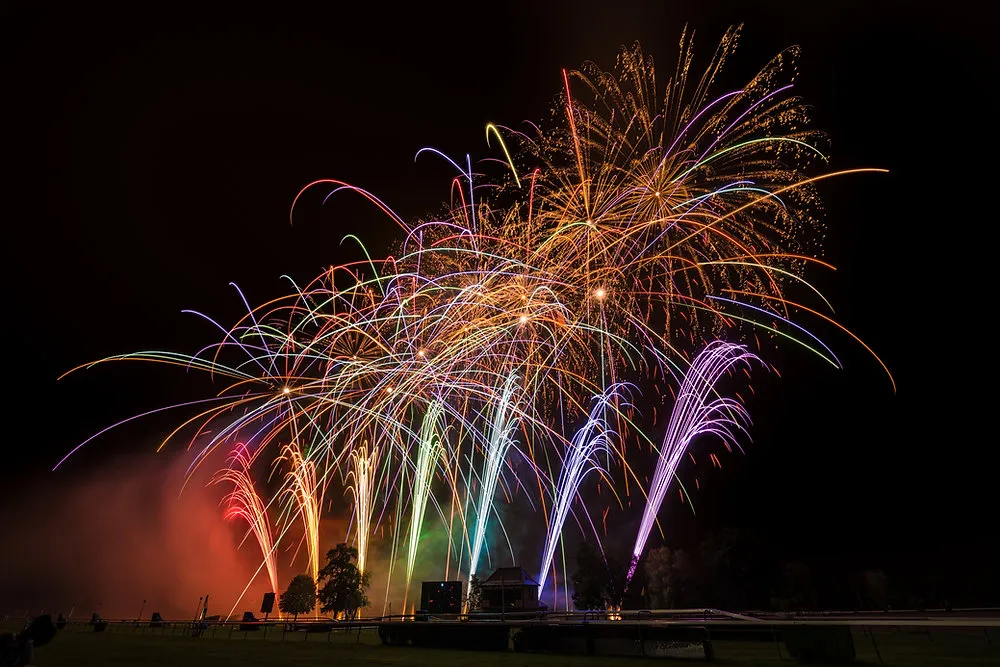
July 14, 2022 marked the return of major public celebrations in many French cities. After two years still shaped by health restrictions, the national holiday reclaimed its colours: dances, concerts, parades, family gatherings and, of course, fireworks displays. Behind the scenes, artistic directors fine-tune their soundtracks, pyrotechnicians secure firing zones, and municipal teams manage spectator flow. For the public, only one question remains: where should you stand to watch the sky light up?
Paris: the Eiffel Tower’s flagship event
In Paris, the July 14 fireworks remain one of the most watched pyrotechnic shows in France. In 2022, it was scheduled for 11 p.m., launched from the Eiffel Tower and its surroundings, after the Concert de Paris held at the foot of the monument. The Champ-de-Mars and the Trocadéro remain the most iconic places to experience the event up close, with especially powerful sound and visual immersion. But they are also the most crowded areas: you need to arrive early, accept the wait, anticipate security checks and plan a gradual exit after the final bouquet.
For those who want to avoid the density of the main event, several viewpoints offer a distant glimpse of the Eiffel Tower: bridges over the Seine, open quays, elevated areas in western Paris, permitted terraces or urban belvederes. The experience is different there: less direct, sometimes without the synchronised soundtrack, but often more comfortable. The key is to choose a clear view of the Iron Lady and, on the day itself, check traffic perimeters and station closures, which are very common around the Champ-de-Mars.
Lyon: Fourvière in all its grandeur
In Lyon, the July 14, 2022 show was announced from Fourvière hill at 10:30 p.m. The site is one of the most spectacular in France for fireworks: the basilica, the slope, the Saône, the quays and the urban perspectives create a remarkable natural backdrop. The announced theme, “Pure pyrotechnics,” promised to showcase the hill with a succession of tableaux, height variations and light effects around Fourvière.
To enjoy Lyon’s fireworks, the Saône quays are traditionally an excellent choice, provided you arrive with a comfortable margin. The bridges, the edges of the Presqu’île and certain high points in the city also allow you to frame your own view. Lyon’s layout is especially appealing for pyrotechnics enthusiasts: it reveals the relationship between the monument, the firing points, the flames and the aerial effects. This is a show that reads as much in depth as in height.
Toulouse: the Garonne as a pyrotechnic stage
In Toulouse, the 2022 celebrations planned a fireworks display at 10:30 p.m. over the Garonne, designed by Ruggieri. The river plays a central role here: it opens up the space, reflects the colours, amplifies the visual scale of the show and allows the public to spread across several areas. The riverbanks, bridges and quays offer varied viewpoints, with different atmospheres depending on whether you seek an immersive close-up experience or a more panoramic perspective.
The Pink City has a deep connection with its large outdoor gatherings. Its July 14 fireworks often feel like a collective pause, blending music, reflections on the water and urban silhouettes. For the best experience, it is wise to map out your access in advance, favour public transport and avoid arriving too late in the most sought-after areas. Families are advised to choose a slightly set-back location: visibility is often still excellent, and the return journey is usually calmer.
Marseille: the Old Port in open-air mode
In Marseille, the Old Port is the natural setting for July 14. In 2022, the fireworks were announced for around 10:30 p.m., continuing the festivities and the parade. The water, the quays, Fort d’Entrecasteaux, the Pharo and the views toward Notre-Dame-de-la-Garde create an immediately recognisable backdrop. Here, pyrotechnics enter into dialogue with the sea, stone and crowd, in a very distinctive Mediterranean atmosphere.
The Old Port draws large crowds, so planning ahead is essential. The quays offer obvious proximity, but the Pharo garden, when open for the occasion, can provide a remarkable viewpoint. Higher ground and certain rooftops also allow you to take in the entire urban harbour, with greater comfort but limited availability. As in all major cities, access to the centre may be modified: parking bans, restricted traffic, reinforced transport or adapted routes. The right reflex is to check municipal information before leaving.
Bordeaux, Nantes, medium-sized towns: look close to home too
If Paris, Lyon, Toulouse or Marseille attract the media spotlight, July 14 is just as much alive in medium-sized towns, seaside resorts, rural communes and along riverbanks. Bordeaux traditionally makes the Garonne one of its great national holiday settings, with sought-after views from the quays and both banks. Nantes, depending on the year and site constraints, also hosts popular gatherings around its large urban spaces and waterways. Across France, fireworks may be launched on July 13 or 14 depending on the commune: it is both a local tradition and a national occasion.
When choosing, do not look only at the size of the show. A twenty-minute spectacle in a major metropolis does not offer the same experience as a shorter show in a small town, launched over a lake, a castle, a beach or a park. The quality of the viewpoint, musical synchronisation, site safety, accessibility and atmosphere matter just as much as the pyrotechnic scale. Experienced enthusiasts know this: a well-composed show, precise in rhythm, with clearly readable colours and a controlled final bouquet, can create lasting emotion without excess.
Heatwave, drought, safety: essential checks in 2022
Summer 2022 was marked by high temperatures and a heightened fire risk in several departments. Some communes cancelled, postponed or adapted their fireworks, especially in forested or wind-exposed areas. This is crucial: a show announced days in advance can still be changed at the last minute for weather, prefectural or technical reasons. Before travelling, always check with the town hall, the prefecture or the local organiser.
Safety also concerns the audience. It is recommended to bring water, wear proper shoes, use hearing protection for young children and avoid pushchairs in very crowded areas. Pets, often sensitive to loud detonations, should be kept calm and away from the noise. Recreational fireworks used by private individuals are strictly regulated and may be locally banned: it is better to stick to official shows, designed by professionals, within secured zones.
Seeing fireworks differently
Watching a July 14 fireworks display is not just about looking up at the final bouquet. It is about reading a composition: the opening, the breathing spaces, the shifts in colour, the low-level effects, comets, chandelles, shells, occasional silences, then the build-up to the conclusion. Great pyrotechnicians work on verticality, width, depth, and also on the relationship with music and place. A show launched from the Eiffel Tower tells a different story from one fired from Fourvière, a barge on the Garonne or the water basin of the Old Port.
This culture of pyrotechnic spectacle is what Masters de Feu in Compiègne champions: the art of composing with the sky, the precision of the gesture, collective emotion and the meeting between an audience and fireworks houses. July 14 is its most popular expression. Whether seen from a major regional capital, a river quay, a beach or a village square, fireworks remain a suspended moment: a few minutes of light, rhythm and shared wonder, etched long into the memory of those who watch them.