Weekend in Compiègne: 3 visits before the Masters de Feu
Before the pyrotechnic magic of the Masters de Feu, Compiègne reveals itself as the perfect destination to extend the experience. Between archaeology, the imperial palace, forest and memory, here are three stories to enjoy over the course of a weekend.
Attending Masters de Feu is прежде of all about experiencing a spectacular evening where the Compiègne sky becomes a stage. But it is also an opportunity to enjoy a complete getaway in one of the most distinctive cities of Hauts-de-France. Less than an hour from Paris by train, Compiègne combines the charm of a historic city, the breath of a vast forest, the weight of places of remembrance, and the elegance of imperial heritage. To turn your visit into a true weekend, three narrative threads stand out: the adventure of the collections, the great history of the sovereigns, and the memory of the 20th century. Three ways to discover Compiègne before lifting your eyes, later in the evening, toward the fireworks.
Following in the footsteps of explorers at the Antoine Vivenel Museum
To begin the weekend with a spirit of adventure, head to the Antoine Vivenel Museum. The expression “in the footsteps of Indiana Jones” may bring a smile here, but it captures the spirit of the place well: a curiosity without borders, turned toward ancient civilizations, rare objects, and the stories carried by the collections. Set in the former Hôtel de Songeons, the museum was born from the generosity of Antoine Vivenel, a 19th-century collector from Compiègne who dreamed of a study museum open to his native city.
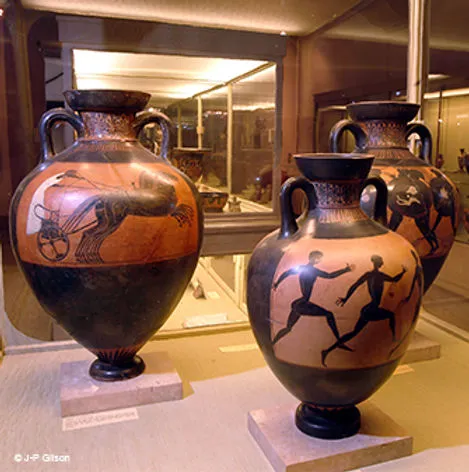
Here, Mediterranean antiquities, regional archaeology, decorative arts, works from the Middle Ages and the Renaissance, as well as Asian collections, all come together. Greek vases, Egyptian objects, pieces from Italy or the ancient world create a journey through time, ideal for families and art history enthusiasts alike. The museum is especially well suited to an early-afternoon visit: rich enough to feed the imagination, central enough to fit easily into a day shaped around the event.
Around the museum, the Songeons park offers a peaceful transition into the city center. Take time to stroll, reach the shopping streets, find a terrace, and see Compiègne at the level of stone and façade. This first stop sets the weekend in a precious tone: before the pyrotechnic compositions of the fireworks artists, other forms of beauty, older and more enduring, open the story.
Imperial Compiègne: the château before the night of fireworks
It is hard to stay in Compiègne without stepping inside the château. The city still bears the strong imprint of its royal and imperial destiny. A favored residence of sovereigns, the Palais de Compiègne tells the story of court life, the staging of power, and the evolution of French taste. The historic apartments, galleries, and décor allow visitors to move through several eras, with particular intensity around the First Empire and the Second Empire.
A visit to the château makes an ideal counterpoint to Masters de Feu. In the salons, everything is about composition, perspective, rhythm, and effect. In the evening, at the racecourse, the fireworks artists also work with progression, contrasts, silences, and climaxes. Between the gilding of the palace and the luminous bursts of the show, the connection is more natural than it first appears: Compiègne knows how to stage emotion.
Depending on the time available, you can extend the experience with a walk through the château grounds or toward the avenues opening onto the forest. This breathing space is especially valuable before an evening drawing a large crowd. It allows you to slow down, enjoy the city without rushing, then gradually make your way back to your accommodation or to the event site. For visitors arriving early, it is often the best choice: an emblematic, accessible, elegant visit that immediately reveals the scale of Compiègne.
Forest, Armistice, and memory: another side of Compiègne’s intensity
The third story to experience in Compiègne is more solemn, but essential. The Compiègne Forest is not only a place for walks; it shelters one of the most symbolic sites in contemporary history: the Clairière de l'Armistice. It was here that the armistice of 11 November 1918 was signed, ending the fighting of the First World War. The memorial, the reconstructed carriage, and the site’s scenography give this visit a particularly powerful resonance.
This detour into memory can be made in the morning, when the light and calm of the forest enhance the solemnity of the place. It is a reminder that Compiègne is a city of layers: a court city, a city of collections, a forest city, but also a territory marked by the conflicts of the 20th century. For those who wish to deepen this dimension, the Mémorial de l'Internement et de la Déportation, located on the site of the former Royallieu camp, offers a complementary stop that is both dense and necessary.
This is not about artificially placing heritage beside celebration, or memory beside spectacle. On the contrary, a weekend in Compiègne gains strength by embracing this diversity. Masters de Feu celebrates creation, technical mastery, the art of light, and shared emotion. Daytime visits remind us, each in their own way, that places have depth. The beauty of the evening is all the more powerful when it belongs to a city one has taken the time to understand.
Shaping your weekend around Masters de Feu
To make the most of your stay, simplicity is best when organizing the weekend. On Saturday, aim to arrive late morning or early afternoon, so the day does not feel too rushed. A visit to the city center, the Antoine Vivenel Museum, or the château allows you to soak up Compiègne without multiplying your journeys. Then leave a comfortable margin for an early dinner, preparing your tickets, checking your access, and reaching the racecourse in good conditions.
On the evening of Masters de Feu, the experience begins before the first launch. The atmosphere of the crowd, the installation on site, the anticipation of nightfall, and the gradual entry into the show are all part of the pleasure. Each edition showcases fireworks artists defending a signature, a musical style, and a way of making colors and effects resonate. Depending on the competition cycle, teams may compete for a Silver Master, a Gold Master, or a Platinum Master. The audience, meanwhile, comes in search of that rare blend of precision, surprise, and wonder.
On Sunday, let Compiègne take its time to bring the journey to a close. A walk in the forest, a stop at the Clairière de l'Armistice, brunch in town, or one last heritage visit prolong the glow of the previous evening without dimming it too quickly. It is often the day after the show that the weekend finds its balance: after the intensity of the sky, the calm of the avenues, museums, and stone.
A destination that prolongs the emotion of the show
Masters de Feu is not just a pyrotechnic event: it is a wonderful gateway to Compiègne. By arriving earlier, staying overnight, and choosing two or three thoughtfully selected visits, you turn an event evening into a cultural escape. The fireworks then become the climax of a broader story, begun before antiquities, continued in a palace, deepened in the forest, and completed under the stars.
For a couple, a family, or a group of friends, the formula works because it allows everyone to set their own pace. History lovers will find plenty to explore, heritage enthusiasts will appreciate the city’s elegance, children will remember the adventure of the museums and the power of the final show. Compiègne offers a rare quality: it is at once easy to reach, rich in discoveries, and gentle enough that the weekend never feels like a race. At Masters de Feu, you come for the night. But the whole city deserves to be experienced.