Secrets of the European Capitals: the theme of Masters de Feu 2017
In 2017, Masters de Feu invited pyrotechnicians to turn Brussels, London and Athens into pyrotechnic narratives. A look back at a theme of travel, history and architecture that became one of the hallmarks of the second edition in Compiègne.
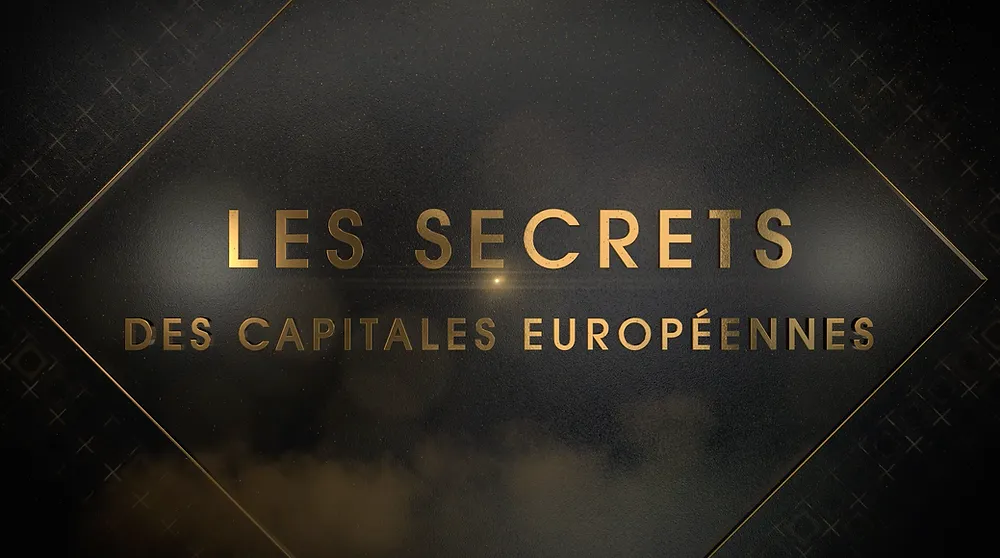
For their second edition, Masters de Feu chose a theme that was both ambitious and instantly evocative: “The Secrets of Europe’s Capitals.” Behind this invitation to travel lay a powerful promise: to bring pyrotechnics into dialogue with culture, architecture, traditions, and the imagination of Europe’s great cities. In Compiègne, the sky became a vivid map of the continent, crossed by flashes, rhythms, colors, and musical references.
A European theme to tell the story of cities differently
A competition fireworks display is never limited to a succession of spectacular effects. At Masters de Feu, each house must defend a vision, establish a dramatic arc, build a musical progression, and give meaning to light. In 2017, “The Secrets of Europe’s Capitals” offered precisely this narrative material: façades, squares, monuments, rivers, popular customs, but also the more intimate mysteries of cities. The theme enabled the pyrotechnicians to go beyond tourism illustration and propose a personal interpretation of Europe, between memory, elegance, and surprise.
The idea seemed simple at first glance: take the audience on a journey across Europe. But staging it required great finesse. How do you translate the silhouette of a capital city without falling into cliché? How do you evoke a national history, an urban atmosphere, a cultural identity, using only pyrotechnic composition and music? That is the very challenge of an international competition: to make each tableau a language, and each bouquet a sign.
Brussels, London, and Athens in the sky over Compiègne
The 2017 program brought together three capitals and three pyrotechnic sensibilities. Belgium was represented by HC Pyrotechnics, with Cliff Hooge as designer. England was represented by Smart Pyrotechnics, under the direction of Steve Martin. Greece, finally, was defended by Nanos Fireworks, with Pavlos and Filippos Nanos. Three houses, three aesthetics, three ways of approaching the same artistic constraint: to convey the spirit of a European capital in fifteen minutes of choreographed spectacle.
Brussels could suggest institutional elegance, humor, the diversity of its districts, and the warmth of its grand squares. London opened up a rich imaginary, between royal majesty, musical modernity, a contemporary skyline, and theatrical mist. Athens, meanwhile, carried a particular depth: that of the ancient city, the Mediterranean, the pale stone, the myths, and an almost sunlit light. The theme thus encouraged contrasts: discipline and whimsy, heritage and energy, historical grandeur and popular pulse.
Pyrotechnics as musical and visual storytelling
At Masters de Feu, musical synchronization plays an essential role. Pyrotechnicians do not simply fire effects: they compose a visual score. The highlights must answer the accents of the soundtrack, the silences must breathe, the build-ups must prepare emotion, and the finales must retain a sense of conclusion. On a theme such as Europe’s capitals, this musical dimension becomes decisive, because it allows the display to move from one atmosphere to another and suggest landscapes without naming them.
Color then becomes a vocabulary. Golds may evoke domes, palaces, or festive lights. Deep blues sketch the night of cities and the elegance of grand avenues. Reds introduce passion, theater, and sometimes solemnity. Comets, fans, candles, and grand aerial effects help build a shifting décor. The sky over Compiègne becomes a panoramic stage, where architecture is no longer built in stone but in luminous trajectories.
A second edition defined by high standards
The 2017 event took place on September 8 at the Compiègne racecourse, a venue now inseparable from the competition. After a successful first edition in 2016, Masters de Feu confirmed its vocation: to bring together, in a single evening, leading international pyrotechnicians and a large audience around a competition that is clear, spectacular, and demanding. More than 12,000 spectators were expected for this second round, a sign of the event’s rapid place in the cultural and festive landscape of the Oise.
The format heightened the intensity of the competition. Each house competed for the Silver Master 2017, a distinction opening the path to the great final for the Gold Master. This structure gives Masters de Feu a multi-year dramatic arc: the winners qualify, the styles respond to one another, and each edition becomes part of a larger continuity. In 2017, the audience was therefore not only attending a fireworks evening; it was also discovering one stage in an international journey toward the final.
A jury at the crossroads of spectacle, culture, and public perception
The 2017 edition relied on a jury chaired by Sandra Lou, TV host and producer. Around her, several personalities brought complementary perspectives: Jérémy Charvet, Bruno Giorgini, Philippe Candeloro, Philippe Marini, Caroline Kromwel, Sophie Goupil, Yannick Le Gall, and Antoine Gilibert. This lineup reflects the spirit of Masters de Feu: pyrotechnics are judged here as a complete performing art, at the intersection of technique, emotion, visual culture, and audience response.
A strong competition display must impress without overwhelming. It must surprise while remaining coherent. It must be bold, yet controlled, because the slightest break in rhythm can weaken the reading of a tableau. On a European theme, the jury could appreciate the richness of the references, the quality of the musical structure, the originality of the effects, and each team’s ability to create a distinct identity. The challenge was not simply to be bigger or louder, but to be more precise.
ArtEventia to open and close the event вне competition
As announced in the program, the opening and closing fireworks were provided out of competition by the French team ArtEventia. This choice helped give the evening a real architectural structure: welcoming the audience, setting the atmosphere, framing the competitive performances, and then closing the event on a spectacular note. In a competition of this kind, out-of-competition sequences play an essential role. They create continuity, allow for smooth transitions, and turn the whole into a grand evening of spectacle rather than a simple succession of launches.
Greece, winner of the Silver Master 2017
Looking back through the archive, the 2017 edition also has its verdict: Greece, represented by Nanos Fireworks, won the Silver Master. This victory allowed it to qualify for the Gold Master final in 2019, alongside notably Italy, winner of the 2016 edition. The theme “The Secrets of Europe’s Capitals” thus remains linked to an important moment in Masters de Feu history: the moment when the competition confirmed its international standing and its ability to create, in Compiègne, true journeys through the sky.
More than a simple title, this 2017 theme reminded everyone of what pyrotechnics can achieve when conceived as writing: an immediate emotion, but also a memory. Brussels, London, Athens, and Compiègne met for the duration of one evening, in that universal language made of light, music, and fire.